Cyclone SAM
May 14
/
Stevie
Iterative is cool and waterfall is for the dinosaurs. ADDIE is out and SAM is in. Yeah, nah.
In this post I will list a few dangers associated with SAM, so you can recognise, plan, and mitigate.
In his book Michael Allen's Guide to e-Learning, the author writes: "Successive approximation is a term I borrowed from psychology. In operant conditioning, it means that the gap between the current behavior and the desired behavior gets smaller as you give rewards for behaviors that are getting closer to the desired behavior."
In his book Michael Allen's Guide to e-Learning, the author writes: "Successive approximation is a term I borrowed from psychology. In operant conditioning, it means that the gap between the current behavior and the desired behavior gets smaller as you give rewards for behaviors that are getting closer to the desired behavior."
The edupunk way of saying that is: "We all go round and round in circles until everybody's so sick of it, we agree it's time to stop."
I'm not seriously knocking it, I'm just having fun. However... here are the dangers:
You may lack buy-in to the process from other members of the team
Allen writes: "Functional prototypes are better than storyboards and design specs (much better)." Agreed.
Further, Allen writes: "Disposable, quick and dirty prototypes are beautiful (and we're happy to try again, three times, then we move on)." Problem.
Managers, project managers, writers and editors who grew up in print media tend not to appreciate quick and dirty prototypes; that has been my experience anyway.
You can tell by the responses you get to your first disposable, quick and dirty prototype: "There's a full-stop missing in the second paragraph; This black and white look won't cut it; The colours are off-brand; There are no images, you'll need images 'to engage the learners' they say —like you've not heard of learner engagement.
Plan: Create a feedback form with the questions you want answered. Prepare your team with an on-boarding session. Try to get buy-in for SAM.
Mitigate: Learn from the first prototype (just as you intended to) and push forward —iterate relentlessly.
Further, Allen writes: "Disposable, quick and dirty prototypes are beautiful (and we're happy to try again, three times, then we move on)." Problem.
Managers, project managers, writers and editors who grew up in print media tend not to appreciate quick and dirty prototypes; that has been my experience anyway.
You can tell by the responses you get to your first disposable, quick and dirty prototype: "There's a full-stop missing in the second paragraph; This black and white look won't cut it; The colours are off-brand; There are no images, you'll need images 'to engage the learners' they say —like you've not heard of learner engagement.
Plan: Create a feedback form with the questions you want answered. Prepare your team with an on-boarding session. Try to get buy-in for SAM.
Mitigate: Learn from the first prototype (just as you intended to) and push forward —iterate relentlessly.
Nuggets of positive feedback give you false hope
Somebody gets it. Maybe they have experience of rapid development from some other project. They give you the type of feedback you want without being judgemental; they collaborate. This gives you false hope that you're making progress —you probably aren't.
Massive amounts of re-work have to be done before you can version and release
WIth SAM you have to build everything multiple times. Allen suggests three times and then stop. My experience suggests it will take five iterations. Sometimes it feels like the changes will never stop.
Smugness will have to be ignored, corrected, or destroyed
Those old-school print media people will be so smug, thinking they have finally coaxed the idiot LD to a workable solution.
I agree with Michael Allen, SAM should be a joyous experience. But if the people you're working with are steeped in stage-gates and sign-offs it could be better for your health to simply resign yourself to that.
In which case:
In which case:
- Refuse to move forward to the Design until you have sign-off on the Analysis.
- Refuse to move forward to the Development until you have sign off on the Design.
Reference
Allen, Michael W.. Michael Allen's Guide to e-Learning: Building Interactive, Fun, and Effective Learning Programs for Any Company (pp. 300-301). (Function). Kindle Edition."
Allen, Michael W.. Michael Allen's Guide to e-Learning: Building Interactive, Fun, and Effective Learning Programs for Any Company (pp. 300-301). (Function). Kindle Edition."
Virtual Incubator Dot Biz
The Learning Collaborative
The Learning Collaborative
Copyright Template Ltd © 2026
Bootstrap :: Literally, to pull yourself up by your bootstraps. The meaning here is to self-fund. To invest only a very small amount of money and grow your business in small cycles.
Validate :: In this context it means to listen intently to what your customers want and then provide them with that.
Validate :: In this context it means to listen intently to what your customers want and then provide them with that.
Pull access :: Used to describe an optional resource. Some learners may not need it, others might be glad of it. This popup is in itself an example of pull access.
Micromasteries :: Discrete skills that are worth learning in their own right. Three examples could be: tying a bowline to make a loop in a rope; square breathing to calm the nerves; and password management to save time and frustration..
We're a start-up. Our early adopter course creators are working on their products now. We will be opening for business shortly.
Private courses
Solutions to organisational problems: induction, professional development, compliance.
Solutions to organisational problems: induction, professional development, compliance.
Public courses
A diversity of passion projects: lifelong learning, personal development, community engagement.
A diversity of passion projects: lifelong learning, personal development, community engagement.
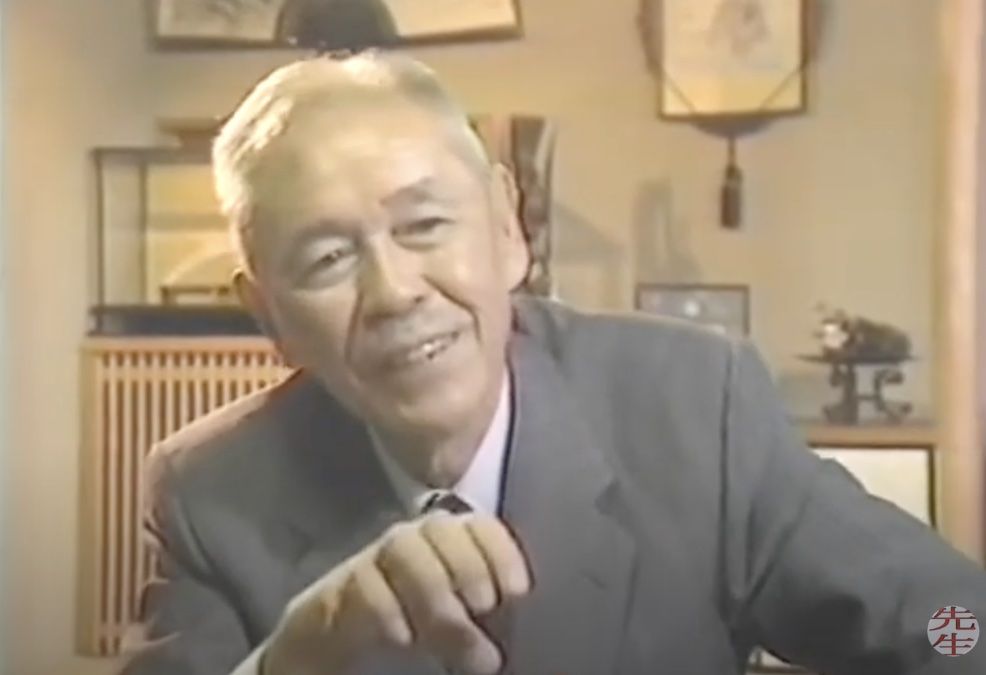
Mr Taiichi Ohno (1912-1990) engineer, industrialist, and businessman best known for developing the Toyota Production System.
This course is in development.